

If you’ve started exploring senior living options for yourself or a loved one, you’ve probably noticed something right away: the terminology can feel overwhelming. Terms like independent living, independent plus, active adult, rental retirement community, and continuing care retirement community (CCRC, also called a life plan community) are often used interchangeably, even though they can mean very different things.
To further complicate matters, within the CCRC category there are different types of options, labels, and contract types that can significantly impact both lifestyle and finances. But one of the most-often confused terms as it relates to CCRCs is “lifecare.”
Terminology that is clear as mud
The first thing to understand is that the word “lifecare” is sometimes used to refer to a specific type of CCRC, as well as a unique CCRC contract type. (See our page “A Primer on CCRC Residency Contracts.”)
The next phase to clarify is “life plan.” Over the past decade, many senior living organizations that offer a continuum of care services have shifted from using “continuing care retirement community” or “CCRC” to “life plan community” to better reflect their holistic approach to aging. However, this shift has unintentionally added confusion to the senior living lexicon, especially because “life plan” and “lifecare” sound similar … but are not necessarily the same thing.
To put it in “simple” terms:
- A lifecare contact, or Type A contract, is one type of contract offered within some continuing care retirement communities (CCRCs, also sometimes referred to as life plan communities).
- If a CCRC offers a lifecare/Type A contract, it may be referred to as a lifecare community.
So, while all CCRCs can accurately be called life plan communities, not all CCRCs are lifecare communities since not all CCRCs offer a lifecare/Type A contract.
>> Related: A Primer on CCRC Residency Contracts
A closer look at lifecare contracts
At its core, a lifecare or Type A contract is designed to provide long-term cost predictability. In a traditional lifecare model, residents pay an upfront entrance fee and a monthly service fee while they are living independently within the community.
There is a key benefit to a lifecare/Type A contract: If and when a resident transitions from independent living to higher levels of care such as assisted living, memory care, or skilled nursing, their base monthly fee generally does not increase despite the higher cost of their care. This is one of the defining features of a lifecare contract.
However, it’s also important to understand what this does not mean. A lifecare contract does not eliminate all future costs. Residents with this contract type should still expect:
- Annual inflationary increases in monthly fees (as is standard at all retirement communities)
- Ancillary charges, such as additional meals or specialized services
- Potential fees for services not included in the standard contract
For example, while living independently, a resident with a lifecare contract will pay their monthly fee, which might include one or two meals per day. However, within the community’s healthcare setting, residents are provided three times daily. So, for those with a lifecare contract, an additional cost for those extra meals would be added to their monthly fee.
Because of these nuances, it’s essential to ask detailed questions about what is and what is not included in a lifecare, aka Type A contract.
How lifecare works for individuals and couples
One of the most appealing aspects of a lifecare contract is its overall cost consistency across different living situations within the same community.
For individuals, the base monthly fee remains relatively stable even if care needs increase. For couples, the structure is similarly predictable. A couple that moves into one of the community’s independent living units typically pays a double occupancy rate, which continues regardless of whether one or both spouses require higher levels of care.
This financial predictability can be especially valuable when planning for the future. According to a survey from AARP, 58% of older adults are concerned that they won’t be able to afford their long-term care costs. What’s more, a 2026 AARP study also highlights that long-term care expenses can vary dramatically depending on health needs and location. Both of these factors make planning for care difficult without a structured model like lifecare.
>> Related: How a Couple’s CCRC Fees Adjust If One Person Requires Care
The tradeoff of lifecare: Paying more upfront
While a lifecare/Type A contract offers predictability, it comes with a clear tradeoff: You typically will pay more upfront and during your independent living years in exchange for reduced financial risk later.
Entrance fees in a lifecare community can be significant, and monthly service fees are often higher as well when compared to other rental-based senior living options. However, these higher initial costs essentially act as a form of prepaid healthcare coverage.
The lifecare model can be particularly appealing given the rising cost of long-term care in the United States. According to cost of care data from CareScout (formerly Genworth), the median monthly cost of a private room in a nursing home in 2026 exceeds $11,000 in many parts of the country; that’s over $133,000 per year! And in 10 years at a moderate 3% annual inflation, CareScout projects that same room will cost nearly $180,000 annually.
Despite what many people think, Medicare typically does not cover the cost of long-term care in a nursing home, so these staggering out-of-pocket prices can quickly drain people’s retirement savings. A lifecare contract can help shield CCRC residents from these potentially dramatic long-term care price increases.
>> Related: If I Move to a Lifecare Community Should I Keep My Long-Term Care Insurance?
A new variation: Equalized rate lifecare
In recent years, some CCRCs have rolled out a new variation on the lifecare/Type A contract known as equalized rate lifecare.
While it maintains the core lifecare philosophy of cost predictability, with equalized pricing, a CCRC resident who makes a permanent move to assisted living or skilled nursing does not necessarily continue paying the same monthly fee they had in independent living. Instead, they transition to a pre-established care rate, which is usually tied to the cost of a specific residence within the community.
For example, an equalized rate lifecare contract might state: “Upon transferring to the CCRC’s healthcare center, the resident will pay a monthly fee equal to the current rate for our smallest two-bedroom independent living apartment.”
In practice, this means residents who were living in lower-priced (often smaller) independent living units may see an increase in their monthly cost when they need care, while those moving from higher-priced (typically larger) residences may actually pay less for care. This is why it’s referred to as “equalized pricing”: Everyone pays the same rate for care, regardless of their previous residence.
It’s also important to understand how this works for couples. If two people are living together in independent living and both eventually require care, each person will pay the equalized care rate individually. This is a notable difference from a traditional lifecare contract, where a couple would generally continue paying the same double-occupancy rate they had while living independently, even if one or both spouses transition to higher levels of care.
>> Related: Equalized Pricing: An Increasingly Common Variation on the CCRC Lifecare Contract
The broad appeal of lifecare
For older adults and their families, lifecare often stands out for one primary reason: peace of mind. It doesn’t just provide senior housing; it offers a comprehensive, structured approach to aging that integrates housing, healthcare, and financial planning into one model.
The ability to plan ahead knowing that future care needs won’t dramatically alter financial stability does more than reduce stress. It prevents uncertainty, answering questions like: Who will care for me (or my loved one)? What will that care cost? Will I have enough money to pay for the care I need? Where will I go if I require care that can’t be provided in my home?
This level of long-term clarity is especially important given longitudinal research of older Americans conducted by the University of Michigan. Their Survey Research Center found that 70% of those who live to age 65 will develop severe long-term care needs during their lifetime, and 48% will receive some type of paid care.
>> Related: CCRC, Life Plan, Lifecare: What are the Differences?
Is lifecare right for you?
Lifecare is not the only option within the CCRC, aka life plan community world, but it is one of the most comprehensive. It offers a unique combination of stability, cost predictability, and long-term planning, which can be very appealing, particularly for those who value long-term security and financial confidence.
At the same time, a lifecare contract is not a one-size-fits-all solution for older adults. The higher upfront costs and ongoing monthly fees mean it’s important to carefully evaluate your personal financial situation, health outlook, and senior living preferences.
As you explore your retirement living options, remember:
- Not all CCRCs offer lifecare contracts.
- Not all lifecare contracts are structured the same way.
- Asking detailed questions before signing any contract is essential to making an informed, financially sound decision.
Ultimately, understanding lifecare is about more than just defining a term. It’s about recognizing how different senior living models align with your goals for aging, independence, and financial security. Taking the time to understand these distinctions now can make all the difference in creating a confident and well-informed plan for your future.
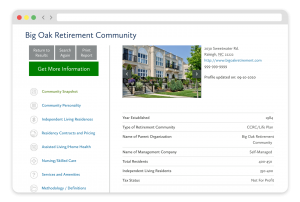
FREE Detailed Profile Reports on CCRCs/Life Plan Communities
Search Communities