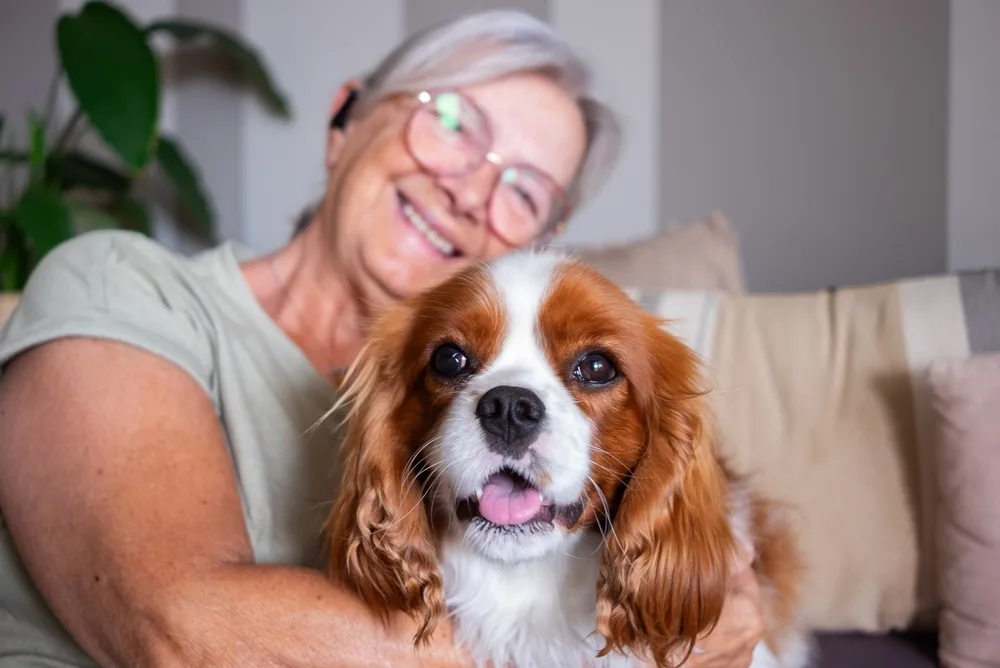


For many older adults, pets are more than companions. They are part of the family, a source of comfort and routine, and an important part of everyday life. So, when considering a move to a retirement community, such as a life plan community (also known as a continuing care retirement community, or CCRC), the ability to bring a beloved pet along can be an important factor in the decision.
But allowing pets and being genuinely pet-friendly can be two different things. In a recent myLifeSite consumer survey, one respondent raised an often-overlooked consideration for older adults planning a move:
“Living in a CCRC allowing dogs, I find that dogs have an overlooked adjustment. Most dogs don’t have the social skills needed when encountering more people and dogs on a daily basis than prior to their move.”
It’s an important observation. Moving to a senior living community can represent a significant lifestyle change for both people and their pets. For instance, a dog accustomed to a quiet home, familiar neighbors, and a predictable walking route may suddenly find itself navigating busy hallways, elevators, unfamiliar dogs, and a steady stream of new people.
For older adults who want to make a senior living move with their pets, there are two important considerations: finding a community that accommodates the needs of both residents and their animals, and preparing pets for the adjustment to their new environment.
>> Related: Pets, Healthy Aging & Senior Living: What Older Adults Need to Know
Finding a truly pet-friendly senior living community
When researching pet-friendly senior living options, it can be helpful to look beyond the community’s basic pet policy. Here are some specific issues to take into account.
Understand the community’s pet restrictions and requirements
Ask about limits on a dog’s size, breed, or number of pets, as well as vaccination requirements. Inquire if there are additional pet-related deposits or monthly fees that you will incur.
For people considering a life plan community, it is especially important to find out whether policies differ across independent living, assisted living, memory care, and skilled nursing. A community that welcomes dogs in independent living may have more restrictive policies if a resident transitions into assisted living or skilled nursing. Understand what those restrictions could mean for your pet if you eventually need additional care.
Evaluate the community’s physical environment
Consider whether the senior living community offers convenient outdoor spaces, designated pet areas, walking paths, or fenced-in areas for pet exercise and play.
Also think about your dog’s behavior and general disposition. Will they be able to navigate elevators, stairs, and busy hallways where they may frequently encounter unfamiliar people and other animals? These factors can be particularly important for older dogs or those less comfortable in social settings.
Ask about pet care assistance
Find out whether the community offers help with tasks like dog walking, pet sitting, or veterinary appointments, and whether these services carry additional fees. Again, this could be particularly important should you become temporarily unable to care for your pet or if you need to transition to a higher level of care.
It’s also wise to identify a family member, friend, or trusted caregiver who can step in and help with a pet should you experience an illness, hospitalization, or rehabilitation stay.
Observe the community’s overall pet culture
A written policy allowing pets at a life plan community or another type of senior living community doesn’t necessarily mean a community is genuinely pet-friendly.
During your visits to prospective communities, look for residents walking their dogs, observe how pets interact in common areas, and ask current pet owners about their lived experiences. Also find out what rules are in place for leashes, barking, and interactions between animals — guidelines that can benefit pet owners and non-pet owners alike.
Just as important, consider whether residents without pets seem comfortable sharing their environment with other’s pets. The goal is to find a community where both pets and people feel welcome.
>> Related: Do Retirement Communities Allow Pets? A Look At Senior Living Pet Policies
Helping your pet adjust to a new home and community
Even after finding a senior living community that meets your needs, there is another important transition to consider: helping your pet adjust. This may be especially important for dogs.
As the myLifeSite survey respondent pointed out, a dog that has spent years living in a relatively quiet home may not be accustomed to encountering dozens of people and other animals throughout their day. This can require a significant adjustment, particularly for older dogs that are accustomed to predictable routines. Fortunately, there are several ways to help make the transition to a senior living community a bit easier for your dog.
Introduce your dog to their new environment before moving day
If the senior living community allows it, bring your dog along for a few visits before your actual move. Start with quieter areas and shorter visits, allowing your pet to become familiar with the new sights, sounds, and smells.
Gradually introduce your dog to the places it will use regularly, such as walking paths, outdoor pet areas, and the route from your new residence to the nearest exit. If elevators are part of daily life in the new residence, practice using them when the community is relatively quiet. The goal is to make the environment feel less unfamiliar before your dog has to navigate it every day.
In its guidance on moving to a new home with your dog, Cornell University’s College of Veterinary Medicine recommends considering the specific environmental changes a dog will experience. For example, a dog accustomed to having a private backyard may need time to adjust to going outside on a leash or to areas shared with other dogs. Similarly, a dog moving into a busier building may need time to become comfortable with unfamiliar noises and people.
Practice positive socialization
A retirement community can expose some dogs to more frequent social interactions than they have experienced previously. However, that doesn’t mean every dog will immediately enjoy meeting new people and animals.
Start slowly. Practice calm, controlled encounters with unfamiliar people and dogs before the move. Reward your dog for remaining calm when passing another dog or encountering someone in a hallway. Keep interactions brief and positive, and allow your dog to maintain a comfortable distance.
Importantly, socialization doesn’t mean forcing your dog to interact with everyone. Some dogs are naturally more reserved. The objective is to help them remain comfortable and manageable in shared spaces, not to turn every encounter into a social opportunity.
Once you move, continue reinforcing these positive behaviors. Keep your dog on a leash in common areas, respect other residents’ personal space, and avoid allowing your pet to approach other dogs without the owner’s permission.
>> Related: Can Pets Slow Cognitive Decline Among Soloagers?
Preserve familiar routines and surroundings
Moving to a new home can disrupt the routines that help pets feel secure. Whenever possible, maintain familiar feeding times, walking schedules, and bedtime routines.
Be sure to bring along your pet’s favorite bed, blankets, toys, food and water bowls, and other familiar belongings, too. Setting up these items in a similar arrangement to your previous home can provide a sense of continuity and safety.
The American Society for the Prevention of Cruelty to Animals (ASPCA) recommends establishing a familiar, quiet space for pets when moving into a new home. Rather than allowing your pet to explore the entire residence immediately, start with one comfortable area and gradually introduce additional spaces as your pet becomes more confident. This can be particularly helpful in a senior living apartment, where unfamiliar sounds from neighboring residences and activity in the hallways may initially be unsettling to a pet.
Give your pet time to adjust to their new home
It is tempting to expect your pet to settle into your new home as soon as you do, but adjustment takes time. A pet that initially seems anxious, withdrawn, or unusually vocal may simply be responding to an unfamiliar environment. Be patient and avoid overwhelming your pet with too many new experiences at once. Allow time for quiet exploration, and then gradually increase exposure to the community’s busier areas.
Pay attention to changes in behavior, including excessive vocalization, hiding, loss of appetite, restlessness, or difficulty settling down. If these behaviors persist or become concerning, talk with your veterinarian. They can help determine whether the behavior reflects adjustment-related stress or another health issue that needs attention.
Prepare for the practical challenges of pet ownership
Finally, remember that a move to senior living may change the amount of time and effort required to care for your pet. For example, moving from a house with a fenced-in backyard to an apartment may mean several additional walks with your dog each day.
It can be helpful to establish a relationship with a local dog walker or pet sitter before moving to a senior living community. This can be especially useful during the initial adjustment period and may provide an important resource if you travel frequently … or if your mobility or health changes down the road.
It is also worth having your veterinarian review your pet’s health before the move, particularly if your pet is older or has mobility issues. Make sure vaccinations and identification information are current, including updating your pet’s microchip registration with your new address.
>> Related: Puppy Love: Pets Offer Numerous Benefits to Long-Term Care Residents
Make your pet part of your senior living plan
For many older adults, the companionship of a beloved pet is an important part of what makes a place truly feel like home. Fortunately, many retirement communities recognize the value pets bring to their residents’ lives. But finding the right fit — both for you you’re your furry friend — requires looking beyond whether a community technically allows animals.
As you evaluate your options, consider your pet’s personality, activity level, health, and ability to adapt to a new, more populated environment. Think about how your own care needs might change over time and whether the community can accommodate both you and your pet as those needs evolve.
And remember that adjusting to a new home works both ways: Just as you will need time to become comfortable with your new senior living residence, your pet will need time to acclimate to its new surroundings and routines too.
With thoughtful planning, patience, and the right community, you and your four-legged companion can make the transition together and enjoy the next chapter of life side by side.