

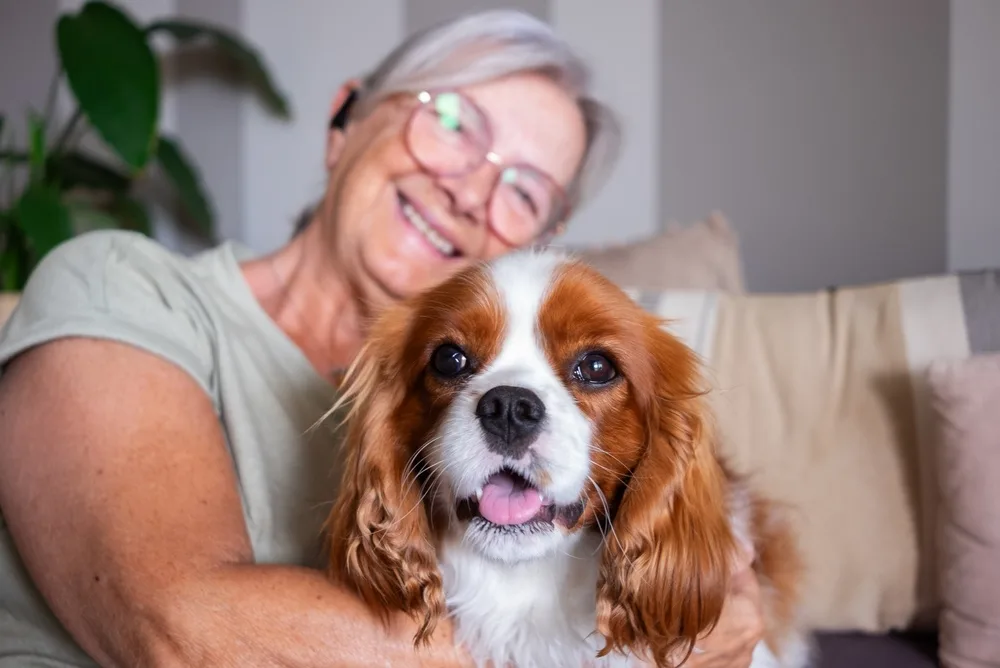
For many older adults, a pet is far more than an animal that shares their home. A dog that insists on a morning walk, a cat that curls up beside its owner, or even a bird or fish that provides companionship often become an important part of daily life. Pets offer routine, connection, affection, and a sense of purpose — all things that become increasingly important as people navigate retirement, the loss of loved ones, or a transition to senior living.
But there is another side to the story to consider. Pets require time, money, flexibility, and the physical ability to care for them. Those responsibilities can become more challenging as people age. So, let’s examine the ways in which owning a pet can impact the lives of older adults.
Research on pet ownership among older adults
The 2026 University of Michigan National Poll on Healthy Aging report entitled, “How Pets Contribute to Healthy Aging: Benefits, Challenges, and Changing Perceptions,” offers a look at how older adults view their relationships with pets.
The national poll found that 55% of adults 50 and older have a pet. Among those pet owners, 83% said their pet gives them a sense of purpose, while 71% said their pet helps them enjoy life.
The researchers also found that:
- 70% of older adult pet owners said their pets help them connect with other people.
- 64% said their pets make them feel loved.
- 63% felt that having a pet reduces their stress.
- 44% said their pets help them stay physically active and stick to a routine.
>> Related: Do Retirement Communities Allow Pets? A Look At Senior Living Pet Policies
A furry friend to lean on
The sense of purpose offered by a pet can be particularly meaningful during major life transitions. Retirement, moving to a new community, or experiencing the loss of a spouse or friends can change the routines and relationships that once gave structure to everyday life. Caring for another living being provides a reason to get up, maintain a schedule, and remain engaged with the world around you.
Pets can also encourage social interaction. Walking a dog may lead to conversations with neighbors or other dog owners, while simply having a pet can provide companionship during periods when an older adult might otherwise spend considerable time alone.
That matters because social connection is an important component of healthy aging. The Centers for Disease Control and Prevention notes that strong social connections are associated with better physical and mental health as we age, and pets can facilitate such interactions.
A systematic review published in 2022 examined 24 studies and found that pet ownership was often associated with lower levels of social isolation in adult populations, although findings concerning loneliness were more mixed. In other words, a pet isn’t a guaranteed cure for loneliness, but for someone who enjoys animals, it may be a meaningful source of companionship and connection.
Pets encourage movement, routine
Pets can also help older adults maintain a more active lifestyle, as noted by the University of Michigan poll. This is particularly true for dogs, whose need for regular walks can encourage their owners to get moving.
Physical activity itself is an important part of healthy aging. According to the CDC’s guidance for older adults, regular physical activity can benefit brain and heart health, strengthen bones, improve balance, and help maintain independence.
A pet should not replace an appropriate exercise program, particularly for someone with health or mobility limitations, but for an older adult who enjoys animals, walking a dog, playing with a pet, or maintaining a regular feeding schedule can provide another reason to incorporate movement and structure into the day.
>> Related: Puppy Love: Pets Offer Numerous Benefits to Long-Term Care Residents
Researching pets’ impact on older adults’ cognitive, physical health
There is also emerging research into possible relationships between pet ownership and cognitive and physical health.
A 2023 analysis of 637 generally healthy adults ages 50 to 100 from the Baltimore Longitudinal Study of Aging found that cognitive decline was slower among pet owners than non-owners over the study period. The researchers also found pet owners experienced less decline in several measures of physical function over an average follow-up period of 7.5 years.
These findings are interesting, but they should be interpreted carefully. Much of the research on pet ownership is observational. Researchers can identify correlations between pet ownership and health outcomes among older adults but cannot necessarily establish that owning a pet causes better health. People who have pets may differ from non-pet owners in other ways that influence their wellbeing.
The takeaway, therefore, isn’t that every older adult should get a pet to prevent cognitive decline or live longer. Rather, pets can be one component of a broader lifestyle that supports physical activity, social connection, routine, and emotional wellbeing as we age.
Aging and pet ownership responsibilities
The University of Michigan National Poll on Healthy Aging report also highlights something that can be easy to overlook when focusing on the positive aspects of pet ownership: Having a pet is a significant responsibility, no matter one’s age.
According to the poll, 31% of pet owners age 50+ said having a pet strains their budget. That figure increased substantially compared with the prior 2018 poll, jumping from 18% to nearly one in three.
Among those polled who did not have pets, 46% said they did not want to be tied down, 33% cited cost, and 19% cited lack of time, while 7% said they were not healthy enough to take care of a pet.
The realities of pet ownership may become particularly important when an older adult is evaluating senior living options. Moving from a single-family home to a retirement community, assisted living, or another type of senior living setting can change the logistics of pet ownership.
Prospective residents should ask more than simply whether pets are allowed; they should find out what pet ownership actually looks like within the community.
- Are there size or breed restrictions?
- Is there outdoor space and/or designated areas for walking dogs?
- What happens if a resident temporarily cannot care for a pet? Can staff members assist with certain tasks?
- What pet care arrangements are available if a resident needs to spend time in a hospital or rehabilitation facility?
These questions are worth asking before a move rather than after one.
>> Related: Can Pets Slow Cognitive Decline Among Soloagers?
Planning for your pet’s future is part of planning for your own
Perhaps one of the most important messages in the University of Michigan report is that older adults should think beyond their current ability to care for a pet. A dog or cat may live for many years. Someone who adopts a young animal at age 70 could potentially still be responsible for that animal well into their 80s or beyond. Changes in mobility, finances, or housing could eventually affect the owner’s ability to provide appropriate care.
The Health Aging report recommends considering an animal’s size, exercise and training needs, veterinary expenses, food and medication costs, and how easily the pet could be cared for when the owner travels or is away. It also points to alternatives such as fostering, pet sitting, or spending time with a friend’s or family member’s pet.
This kind of forward thinking is particularly important for anyone creating or updating an overall retirement and senior living plan. In addition to considering housing, finances, healthcare, and potential long-term care needs, one should also address what would happen to a beloved pet if circumstances change.
As part of your planning tasks, it may be useful to identify a family member, friend, or other trusted person who could care for the animal temporarily (or permanently) if the owner becomes unable to do so. Having that conversation in advance can provide peace of mind for both the owner and the people who may eventually need to help.
>> Related: Important Tasks Following a Death and How to Simplify the Process for Your Loved Ones
Pets and senior living: Looking at the big picture
It’s important to know that, for an older adult who loves animals, moving to a senior living community does not necessarily mean giving up a beloved companion. Many communities are pet-friendly, so residents can enjoy the companionship, routine, physical activity, and opportunities for social interaction that come with pet ownership.
However, making the right senior living decision depends on both the individual and the animal. For instance, someone with a low-maintenance cat may have very different needs from someone who owns a large, energetic dog. An independent older adult may be able to manage pet care easily, while someone who receives assistance with activities of daily living may eventually need additional support to care for their pet.
Ultimately, the question isn’t simply whether pets are “good” for healthy aging. The more useful question is whether a particular pet, living situation, and level of responsibility are a good fit for an individual’s current circumstances and the life they expect to have in the years ahead.
For older adults considering a move to senior living, or for adult children helping a parent plan for the future, another important point to ponder: Healthy aging isn’t just about planning for where you will live or what care you may need. It’s also about thinking intentionally about the people, activities, routines … and pets … that give your life meaning, and making sure your senior living plans can accommodate them for as long as possible.